

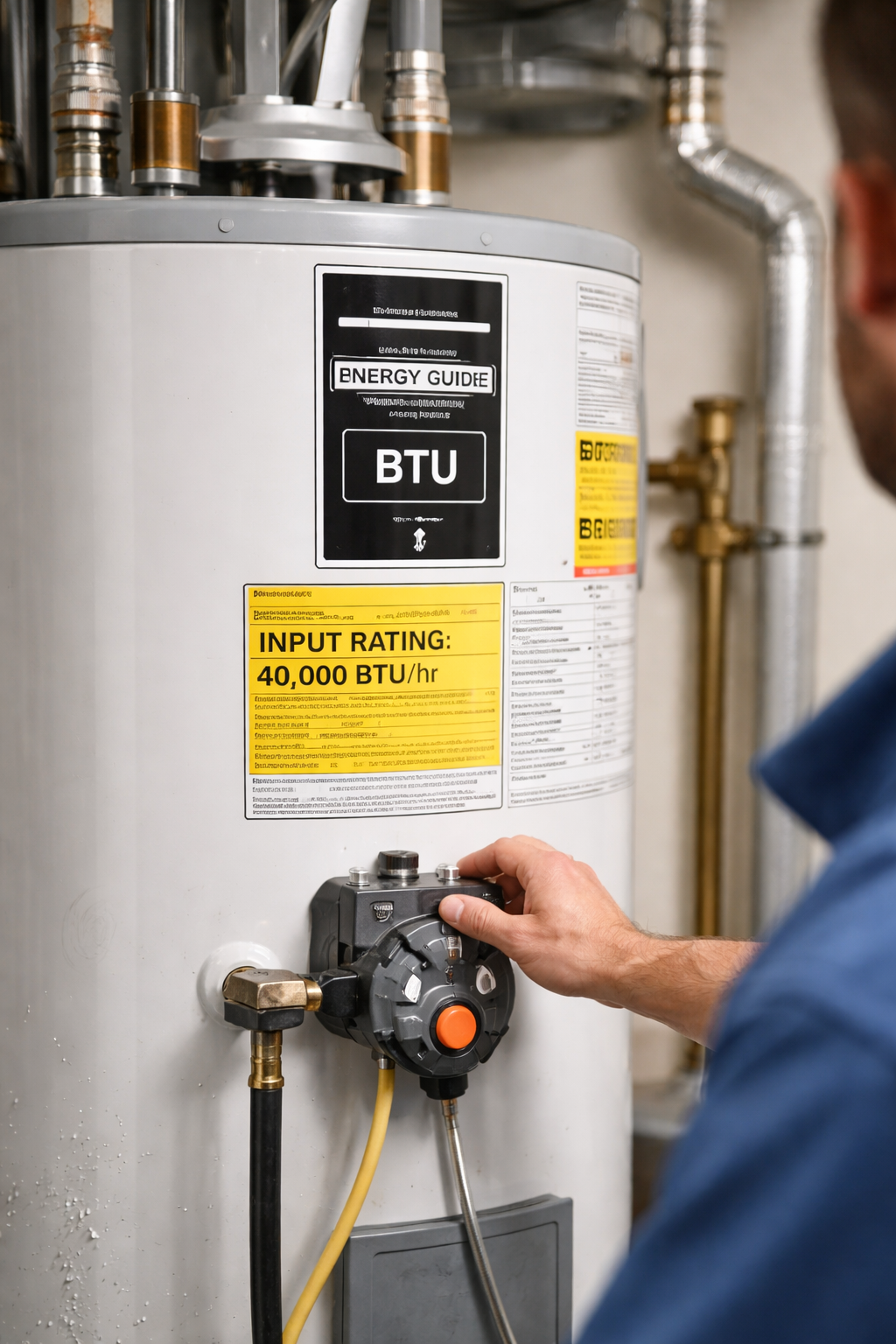
If you’ve ever shopped for a water heater, you may have noticed the term BTU on the specifications sheet. But what does it actually mean, and is a higher BTU always better for your home? Let’s break it down so you can make the best choice for your plumbing system.
What is a BTU?
BTU stands for British Thermal Unit. It’s a standard measurement of energy — specifically, the amount of energy needed to raise the temperature of 1 pound of water by 1°F.
For water heaters, the BTU rating tells you how much heat the burner produces per hour. The higher the BTU, the more heating power the water heater has.
How BTU Affects Your Water Heater
BTU ratings influence:
Recovery Rate
This is how fast your water heater can heat up a tank of cold water.
Higher BTU → faster recovery → more hot water availability during peak use.
Efficiency
A higher BTU water heater may heat water faster, but it doesn’t always mean it’s more efficient. Efficiency depends on the energy factor (EF) and tank insulation.
Household Needs
Small households may not need a very high BTU.
Larger families or homes with multiple bathrooms running simultaneously may benefit from higher BTU ratings.
Does Higher BTU Always Mean Better?
Not necessarily. Here’s what to consider:
Oversized BTU can cause:
Short cycling (heater turns on and off too quickly)
Wasted energy
Higher upfront cost
Undersized BTU may result in:
Slow recovery
Running out of hot water during showers or laundry
The key is to match the BTU to your home’s size, usage, and number of bathrooms.
Tips for Choosing the Right BTU Water Heater
Calculate Your Hot Water Demand
Consider how many showers, faucets, and appliances use hot water at the same time.
Check Manufacturer Guidelines
Each water heater model has a recommended BTU range for optimal performance.
Consider Fuel Type
Gas water heaters usually list BTU ratings. Electric water heaters use kilowatts (kW) instead, but the concept is similar — more kW = faster heating.
Work with a Plumber
A professional can recommend the right BTU size for your home, ensuring efficient heating and avoiding energy waste.
Final Thoughts
BTU tells you how powerful your water heater is, but bigger isn’t always better. The best water heater matches your household’s hot water needs while staying energy-efficient.
If you’re unsure which BTU rating is right for your home, our licensed plumbers at Applause Plumbing & Heating can help you choose and install the perfect water heater for your Easton, Phillipsburg, or Lehigh Valley home.
💧 Need a new water heater or unsure about your current one?
Request an estimate from Applause Plumbing & Heating today and keep your hot water flowing all year long.